Lifeline at VIFF 2026 | Celebrating Somali-Canadian Storytelling
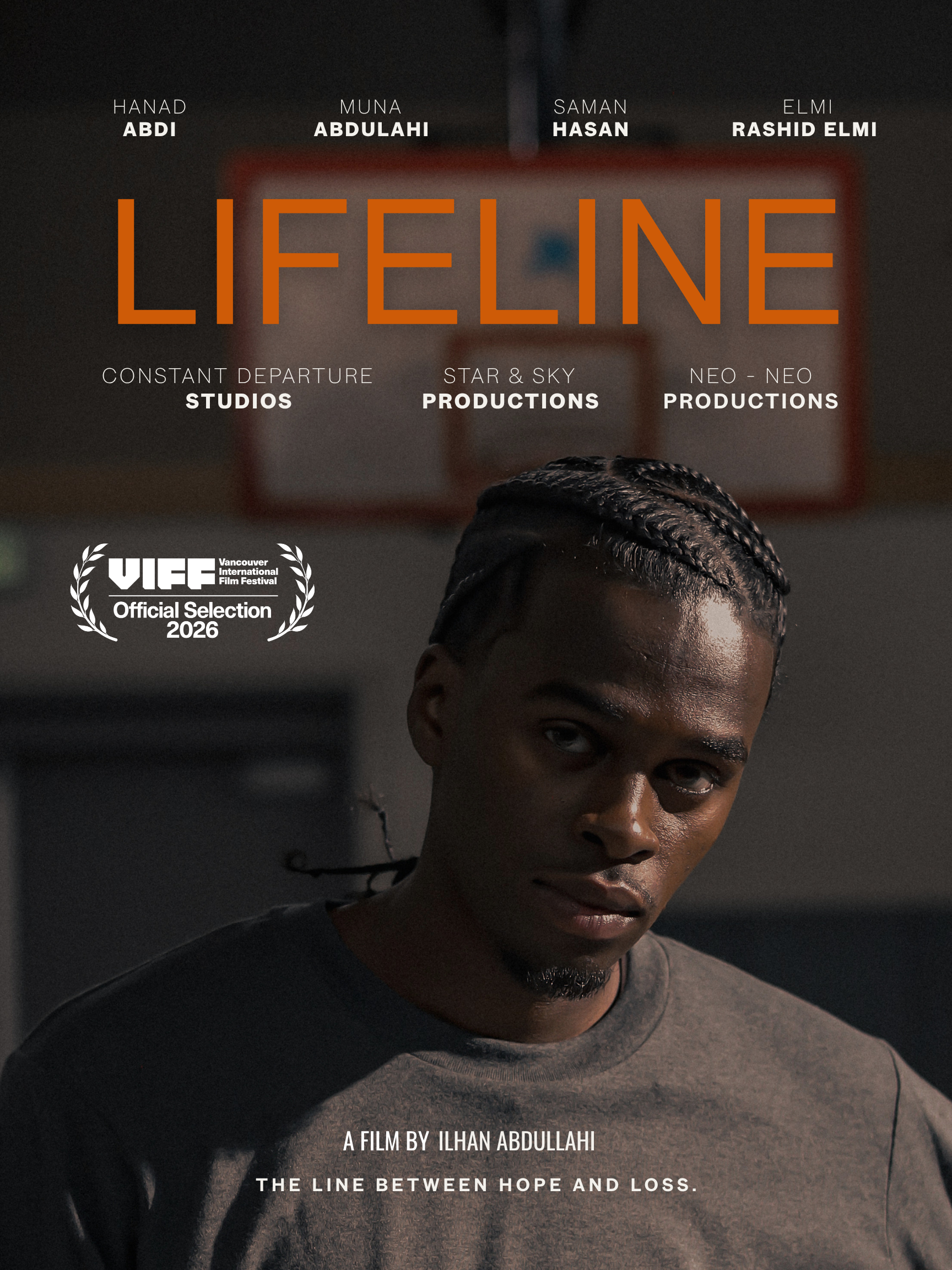
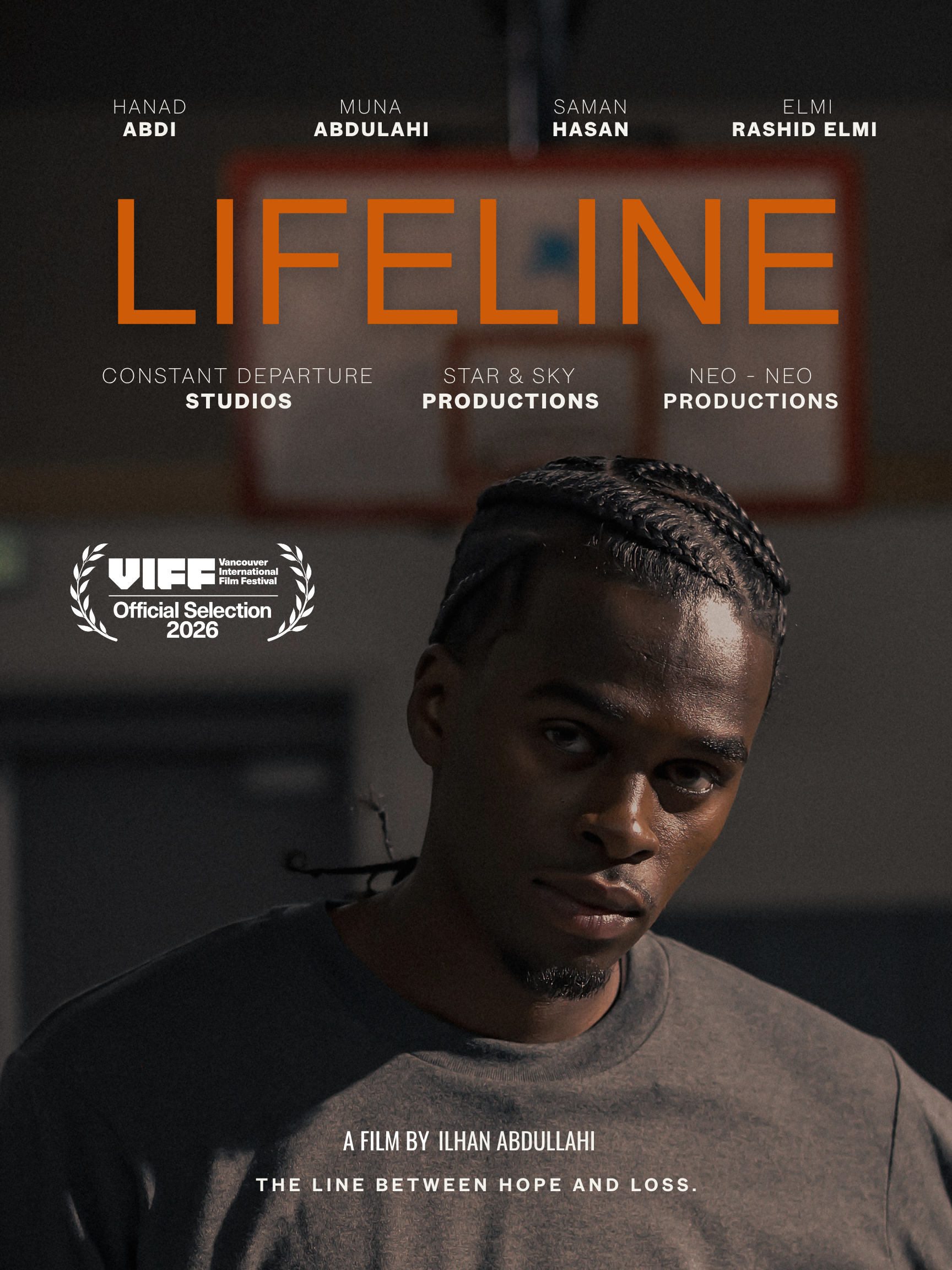
Afro Van Connect celebrates Lifeline, the debut feature from Somali-Canadian filmmaker Ilhan Abdullahi. Rooted in Vancouver's Somali community, the film explores belonging, responsibility, identity and the complicated journey of finding your way back home.

Kor
Contributing Writer
Lifeline: A Somali-Canadian Story of Belonging,
Community and Finding Your Way Back
Afro Van Connect is excited to highlight Lifeline, the debut feature film from Somali-Canadian filmmaker, producer, and community organizer Ilhan Abdullahi, screening as part of the 2026 Vancouver International Film Festival.
Stories about Black communities are often framed through struggle alone. Lifeline takes a different approach, creating space for the complexity of community: responsibility and conflict, but also humour, relationships, resilience, joy and belonging.
Set within Vancouver's Somali-Canadian community, Lifeline follows a Somali youth worker who is assigned a high-stakes case that unexpectedly draws her back toward a community—and a part of her own past—that she has worked to leave behind. As the boundaries between her professional responsibilities and personal life begin to disappear, she is confronted with questions about where she belongs and what responsibility we carry to the communities that helped shape us.
A Story Rooted in Vancouver
What makes Lifeline particularly meaningful is how deeply the film is connected to the community from which its story emerges.
Writer and director Ilhan Abdullahi is a Somali-Canadian filmmaker, producer, and community organizer based in Vancouver. Her work centres Black, Muslim, and migrant communities and explores themes of identity, belonging, community and joy. Her previous short films include Dreamers (2023), Not For Us (2023), and the award-winning comedy Unqualified (2024). Lifeline, her first feature film, was developed through the Whistler Film Festival Screenwriters Lab.
Abdullahi also brings years of work alongside refugee and Black communities in Vancouver into the film. That relationship to community gives Lifeline a perspective that reaches beyond representation alone.
It asks what happens when Black communities are given the space to tell stories about themselves in their fullness.
Not simply stories of hardship, but stories about relationships, contradictions, humour, responsibility, memory and the complicated meaning of home.
What Does It Mean to Belong?
At the centre of Lifeline is a question that will resonate with many immigrant, refugee and diasporic communities:
Can we ever truly separate ourselves from the communities and places that made us?
The film's protagonist has created distance between herself and a community connected to her past. But her work forces those worlds back together.
That tension opens a larger conversation about belonging. Community can provide identity, safety, culture and connection, while simultaneously carrying expectations and responsibilities that can be difficult to navigate.
Lifeline doesn't appear interested in providing an easy answer. Instead, it explores the complicated journey of finding one's way back to a community once left behind. VIFF describes the film as making room for joy and resilience alongside struggle, allowing its characters to exist with greater complexity.
Why Stories Like Lifeline Matter
For Afro Van Connect, supporting Black storytelling means supporting the ability of Black communities to define themselves.
Cinema can function as a form of cultural memory. It can document communities, preserve experiences and create opportunities for people to recognize themselves and their families on screen.
That becomes particularly powerful when the stories are locally rooted.
Vancouver is home to Black communities with histories, cultures and experiences that aren't always visible within dominant narratives about the city. A Somali-Canadian feature created by a Vancouver filmmaker therefore represents more than an individual artistic achievement. It contributes to a growing cultural record of Black life in this city.
And while Lifeline emerges from a distinctly Somali-Canadian experience, its questions about migration, home, responsibility and belonging can reach far beyond one community.
About the Film
Lifeline
Director & Screenwriter: Ilhan Abdullahi
Producer: Mimi Dejene
Country: Canada
Year: 2026
Runtime: 77 minutes
Languages: English and Somali with English subtitles
Production: Constant Departure Studios / Star & Sky Productions
VIFF Program: Northern Lights / BC Spotlight
Content consideration: Sound of gunshots
The cast includes Muna Abdulahi, Hanad Abdi, Jason Benson, Saman Hasan, Bilal Salad and Abdishacur Ali.
See Lifeline at VIFF 2026
There are currently two scheduled opportunities to experience Lifeline during VIFF:
Thursday, October 8, 2026 — 7:00 PM
International Village 10
Saturday, October 10, 2026 — 4:30 PM
International Village 8
Both screenings list subtitles and hearing assistance.
View Lifeline and get tickets through VIFF
Celebrating Black Canadian Cinema
We encourage our community to experience Lifeline at VIFF 2026 and support the Black filmmakers, actors, producers and creatives bringing these stories to the screen.
There is something particularly powerful about seeing a story grounded in Vancouver's Somali community presented as part of one of the city's major cultural festivals.
It reminds us that Black Canadian cinema isn't one story.
It is Somali-Canadian. It is continental African and Caribbean. It is immigrant, refugee and Canadian-born. It is intergenerational. It is local and global.
And as more Black filmmakers are able to tell stories from within their own communities, we build a richer cultural archive of who we are, where we have been, and where we are going.
Join us in celebrating Ilhan Abdullahi and Lifeline at VIFF 2026.